Client Situation
The client was operating a relatively new YouTube channel with consistent uploads and a defined niche. Despite steady posting, growth had slowed. Videos received initial impressions but rarely scaled beyond early testing.
Initial Performance Metrics
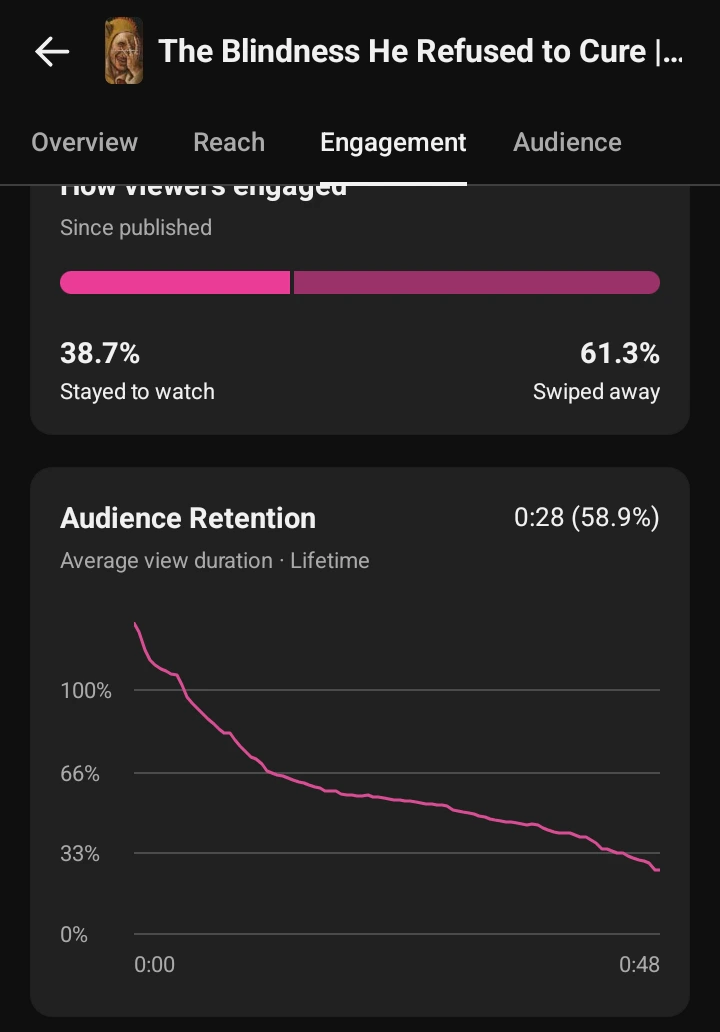
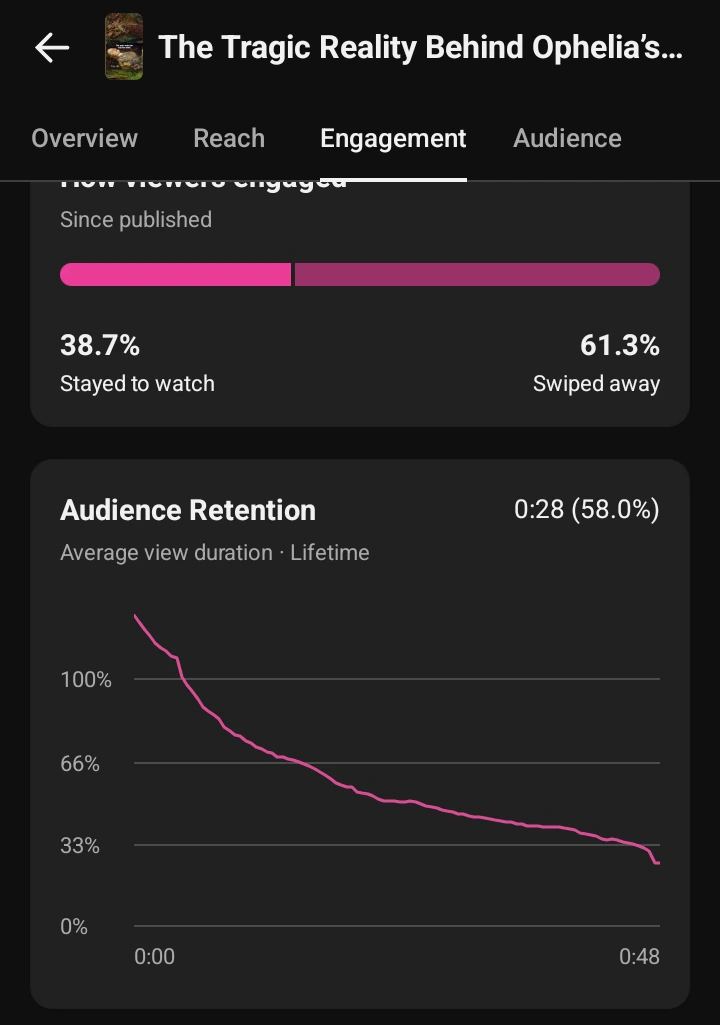
- Average View Duration (AVD): 60–70%
- Noticeable drop-offs in the first few seconds
- Limited discovery beyond existing viewers
- Weak looping and replay behavior
While a 60–70% AVD is respectable, it often falls short of the threshold YouTube requires to aggressively expand reach for newer channels.
Why AVD Is Critical for New Channel Growth
New channels lack historical performance data. As a result, YouTube relies heavily on one metric above all others: how long viewers stay.
Average View Duration acts as a trust signal. High AVD indicates viewer satisfaction and low abandonment risk, allowing the algorithm to safely push content to wider audiences.
The Core Problem
The challenge was not content quality or niche selection. It was structural inefficiency. Hooks were delayed, pacing allowed attention gaps, and emotional payoff arrived too late.
Our Retention-First Strategy
- Removed intros and opened videos mid-context
- Optimized the first 1–2 seconds to prevent swipe-aways
- Inserted micro-payoffs every few seconds
- Used curiosity and emotional open loops
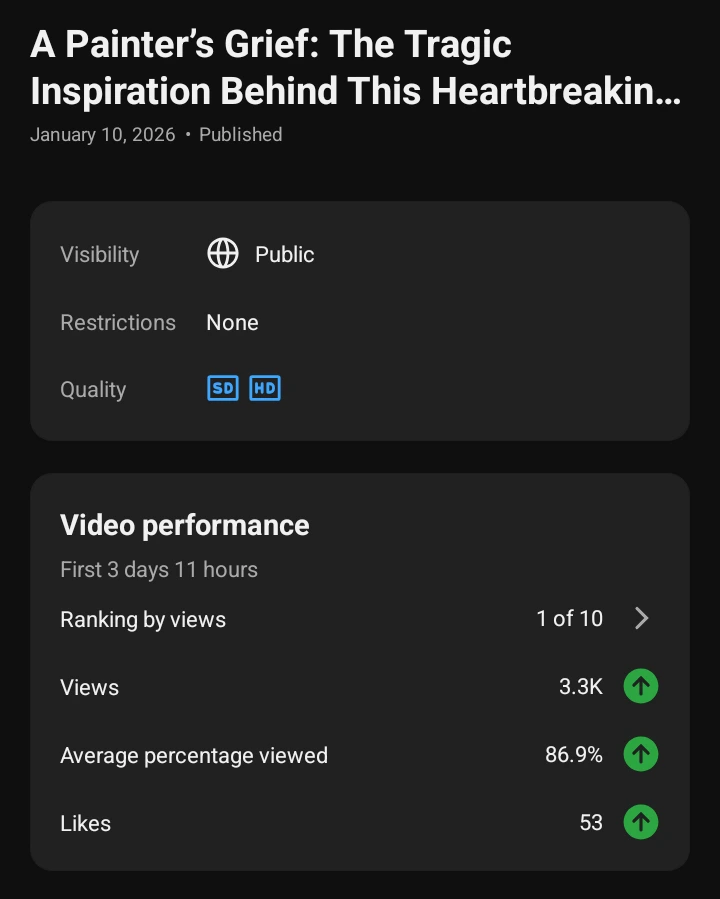
Before & After: Engagement Comparison
Below is a direct comparison of Average View Duration before and after implementing our content creation strategy.
Why 82%+ AVD Brings 1M Views Within Reach
YouTube distributes content in testing waves. When AVD remains above 80%, videos pass each test rapidly, unlocking progressively larger impression pools.
At this stage, the algorithm stops treating content as experimental. Each new upload benefits from accumulated trust and faster scaling.
Frequently Asked Questions
What is Average View Duration (AVD)?
AVD measures how much of a video viewers watch on average. It is one of YouTube’s strongest indicators of viewer satisfaction.
What is retention on YouTube?
Retention shows where viewers drop off during a video. AVD summarizes overall watch behavior, while retention reveals weak points.
Why is AVD more important than likes or comments?
Likes and comments signal reaction. AVD proves attention. YouTube prioritizes watch behavior over interaction.
What is a good AVD for a new channel?
- 60–70%: good but limited
- 75–80%: strong
- 82%+: algorithm-favored
Key Takeaway
YouTube growth is not about posting more. It is about holding attention longer.
How does YouTube calculate Average View Duration (AVD)?
AVD is calculated by dividing the total watch time of a video by the number of views. It shows the average time a viewer spends on your content.
Does video length affect AVD?
Yes. Longer videos can have lower AVD percentages if viewers don’t watch all of it. The key is keeping viewers engaged throughout, regardless of length.
How can I improve AVD for new videos?
- Start with a strong hook
- Maintain consistent pacing
- Deliver value early
- Include micro-payoffs every few seconds
- Avoid unnecessary fillers or long intros
What is audience retention vs. AVD?
Audience retention measures the percentage of viewers who watch at each second of the video. AVD is the average time they watch overall. Retention gives more granular insight.
Why do high AVD videos rank better on YouTube?
YouTube prioritizes watch time because it indicates satisfied viewers. High AVD signals the algorithm that your video keeps attention, increasing distribution.
Can high AVD help with YouTube monetization?
Yes. Better engagement and longer watch time can increase your CPM, ad placements, and overall channel authority, making monetization more sustainable.
What is a strong benchmark for AVD on new channels?
- 60–70%: good
- 75–80%: strong
- 84%+: exceptional, often unlocking algorithmic amplification
How often should I analyze AVD?
Regularly. Ideally, review after each upload and track trends weekly to identify patterns, weak spots, and content that keeps viewers watching.
Can thumbnails and titles affect AVD?
Indirectly. Click-worthy titles and relevant thumbnails bring in the right audience. If your content matches expectations, viewers are more likely to watch longer.
Does engagement (likes/comments) influence AVD?
Not directly. Engagement signals help YouTube understand content popularity, but AVD is strictly about watch time. High engagement usually correlates with higher retention, though.
Can I increase AVD without changing video topics?
Yes. Focus on structure, storytelling, pacing, and delivery. Sometimes small tweaks—like cutting dead space or rearranging content—can significantly improve AVD.
How does high AVD accelerate reaching 1M views?
High AVD allows videos to pass YouTube’s initial testing waves quickly. Each wave exposes your content to more viewers, creating a compounding effect that scales rapidly.
Want Similar Results?
Tayaluga helps creators and brands engineer content for retention, reach, and sustainable growth. Contact us to start.